UniUni’s $1B SPAC, Amazon's 30-Minute Push & SCOTUS’ Ruling on Freight Brokers: The Latest Logistics News
UniUni Eyes $1B SPAC Deal on TSX
The alternative carrier market is officially coming of age. BetaKit reports that last-mile delivery startup UniUni is in talks to go public on the Toronto Stock Exchange (TSX) via a massive $1 billion USD SPAC deal. As brands desperately seek out reliable, cost-effective alternatives to FedEx and UPS, regional and tech-enabled carriers like UniUni are capitalizing on the massive influx of volume.
UniUni’s revenue grew from $113 million USD in 2023 to $295 million USD in 2024 and $683 million USD in 2025. UniUni expects to hit $1.1 billion USD in sales this year and surpass $1.5 billion USD in 2027. The company lost $70 million USD in 2025, but expects to reach profitability this year and generate $125 million USD in pre-tax profits in 2027. While I’m a huge supporter of UniUni - many brands and 3PLs we work with leverage them - their labor practices have been scrutinized in the past, including from multiple proposed class action lawsuits. Media reports last year also said local police in Connecticut found people sleeping in sordid conditions inside a UniUni warehouse.
However, a billion-dollar public exit would validate the entire "challenger carrier" category. Source: BetaKit
Amazon Expands 30-Minute Delivery
While the rest of the market struggles to maintain 2-day margins, Amazon is moving the goalposts again. Supply Chain Dive notes that the Everything Store is aggressively expanding its ultra-fast, 30-minute delivery service to additional cities. By leveraging sub-same-day facilities and localized inventory nodes, Amazon is resetting consumer expectations, making speed an even steeper moat against independent brands. Source: Supply Chain Dive
SCOTUS Ruling Rocks Freight Brokers
In a monumental decision with massive liability implications, the Supreme Court ruled last week that freight brokers can face negligent hiring lawsuits under state law. SCOTUSblog breaks down the ruling, which effectively strips away the federal preemption shield brokers previously relied on. If a broker hires a carrier with a poor safety record and an accident occurs, the broker is now fully exposed to state-level negligence claims. Expect insurance premiums and vetting costs to skyrocket across the brokerage sector. Source: SCOTUSblog
FedEx & UPS Spike International Surcharges
The global supply chain squeeze is hitting the parcel networks. The carriers are applying temporary fees for shipments between the U.S. and various countries until further notice. One from UPS is a $0.32 per pound surcharge for volume to the U.S. from any origin country or territory, save for those in which a surge emergency fee already applies.
FedEx and UPS are upping their fuel fee calculations on import and export services as well. For example, if the price per gallon of jet fuel is $4 in a given week, FedEx will levy a 38.5% fuel surcharge for international exports. Previously, FedEx charged a 36.5% rate at that fuel price. Meanwhile, DHL eCommerce is increasing its fuel surcharge calculations for domestic products on May 30.
Both FedEx and UPS have aggressively hiked their international fuel surcharge rates and implemented new surge fees on specific cross-border lanes. With ocean freight disruptions pushing more urgent cargo into the air networks, the legacy carriers are protecting their margins and passing the compounding operational costs directly down to the shipper. Source: Supply Chain Dive
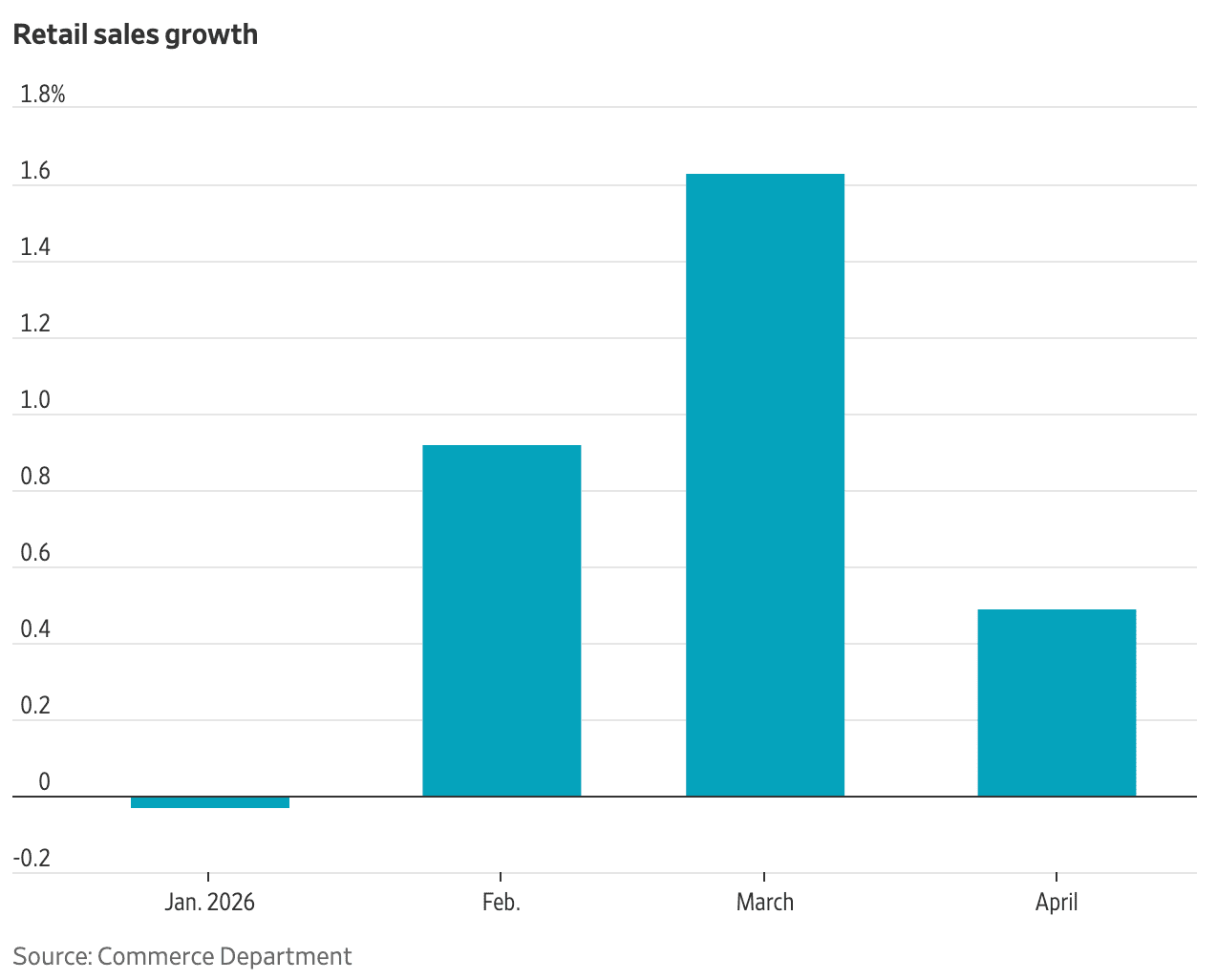
Data Check: Consumers Are Hanging In There
Despite inflationary pressures and tightening credit, the American consumer is still spending. The latest retail sales data detailed by the WSJ shows steady, resilient demand. Source: WSJ