Amazon Rallies NYC Shoppers Against Mamdani-Backed Delivery Bill
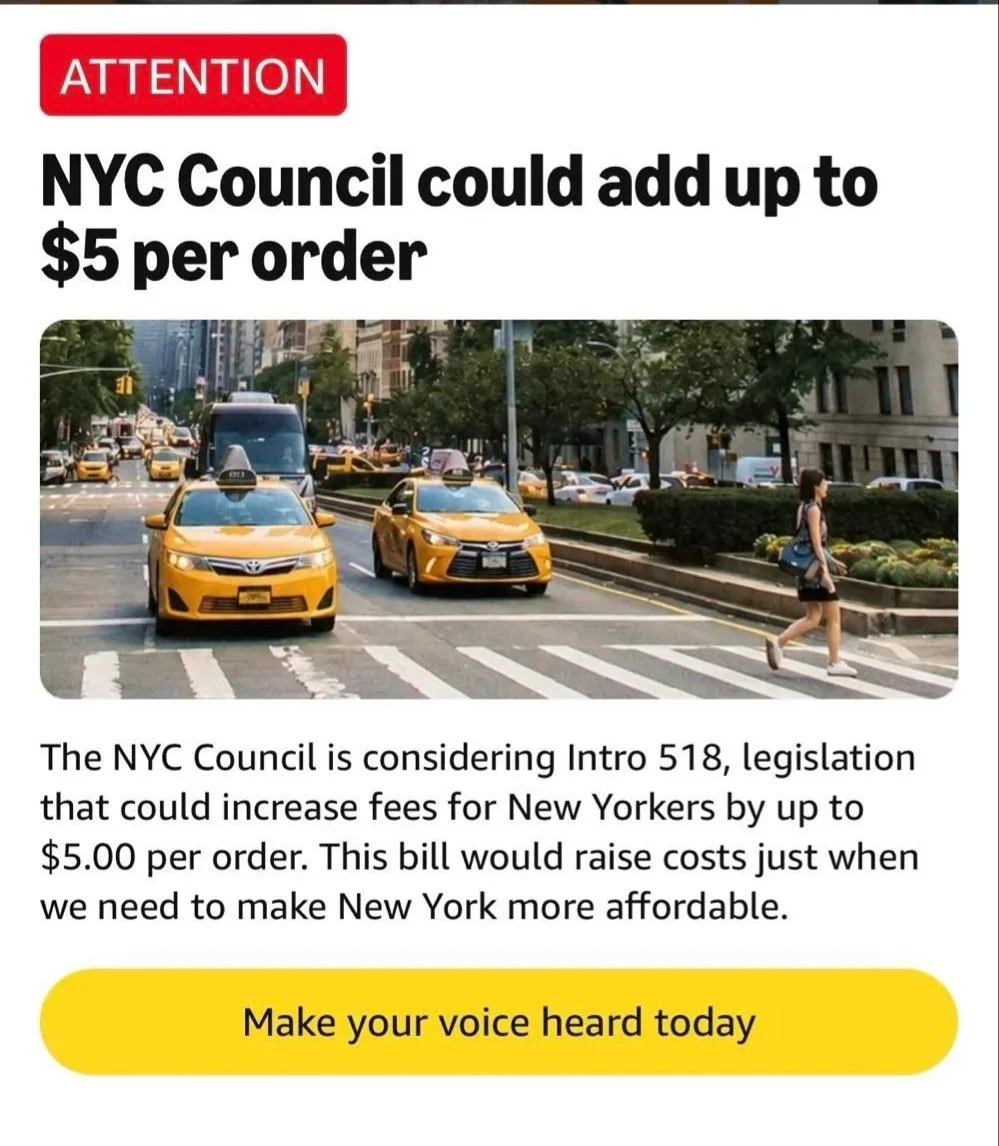
The fight over New York City's sidewalks just went straight to the checkout screen. Amazon rolled out pop-up and in-app alerts warning NYC customers that Intro 518-the Delivery Protection Act, backed by Mayor Zohran Mamdani and the Teamsters-could add up to $5 per order. The bill would require large delivery operators to obtain a city license and directly employ last-mile drivers rather than contracting through third-party Delivery Service Partners (DSPs). Amazon warned the law threatens over 40 small delivery businesses employing 5,000-plus New Yorkers and floated moving operations outside the city. Mayor Mamdani fired back on X, calling a potential $5 surcharge "greed," while City Council Speaker Julie Menin labeled Amazon's campaign "deceptive" and said the council is crafting amendments to protect workers without impacting prices or jobs. Source: WSJ
Data Check: Ocean Spot Rates Fall for Fourth Straight Week
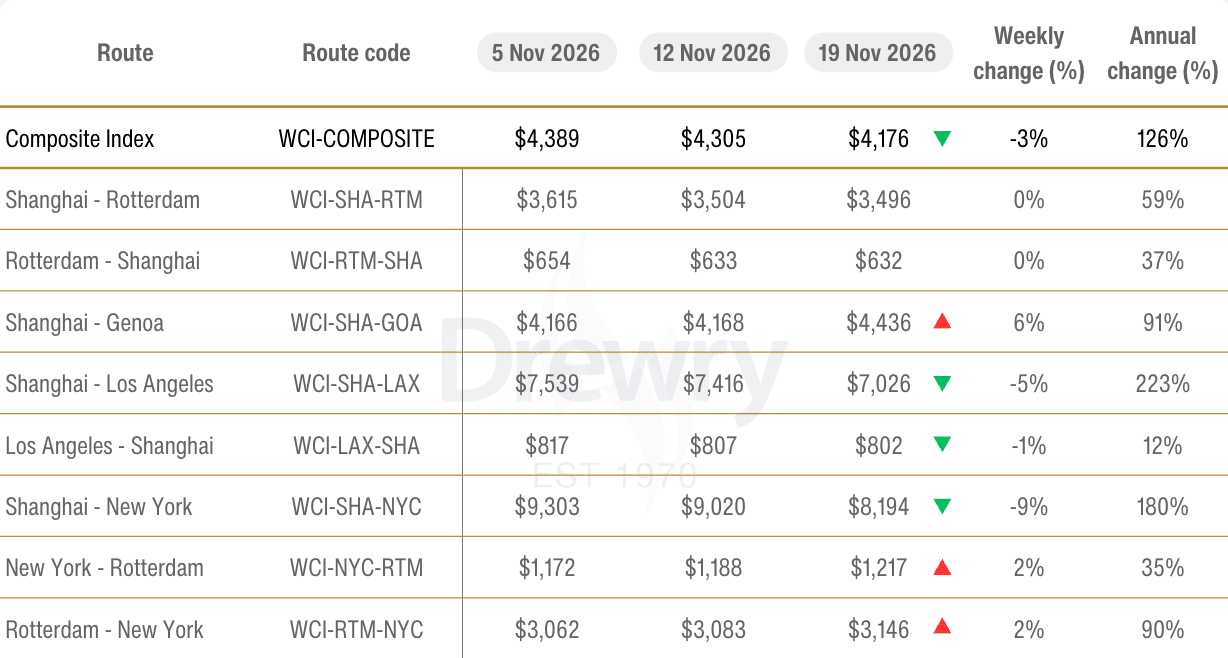
Despite the West Coast labor jitters, container spot rates continue to cool off from their late-summer peaks. According to the latest Drewry World Container Index (Nov. 19), the composite index fell 3% week-over-week to $4,176 per 40ft container-marking its fourth consecutive weekly decline, though it remains 126% higher than a year ago. Source: Drewry WCI
Walmart's Sub-30-Minute Delivery Volume Nearly Triples in Q3
If you thought same-day shipping was fast, Walmart is resetting the clock to 30 minutes. In Q3, Walmart's U.S. deliveries completed in under 30 minutes nearly tripled-a figure that includes 15 minutes for in-store picking. Following an August rollout across 38 U.S. markets, the retailer can now reach 60% of U.S. households within a 30-minute window. Overall U.S. online sales grew 23% year-over-year, with over 80% of orders fulfilled directly from stores (store-fulfilled deliveries jumped more than 40%, and expedited deliveries rose over 50%). To keep unit economics intact, Walmart is staging select online marketplace inventory inside stores and using forward-deployed "Walmart Depots" to increase route density and lower last-mile per-package costs. Source: Supply Chain Dive
The Backyard Battle Over Amazon Delivery Drones
While drone operators are raising billions on Wall Street, the reception on the ground is getting complicated. The WSJ spotlighted growing community backlash in Baton Rouge, Louisiana-where Amazon's Prime Air began flying in July-as residents push back over noise, privacy concerns around flying cameras, safety, and wildlife disruption. With Amazon targeting a massive expansion of Prime Air to nearly 500 U.S. cities and towns this year (aiming for 1 million deliveries), civil liberties groups like the ACLU are pressing for clear privacy rules before skies fill up with commercial delivery fleets. Source: WSJ
GXO Pivots to Data Centers and Defense to Boost Margins
At its Investor Day on Monday, contract logistics giant GXO Logistics unveiled an ambitious 2030 roadmap aimed at escaping thin retail margins by pivoting hard into higher-margin B2B verticals: data centers and technology, aerospace and defense, life sciences, and industrials. CEO Patrick Kelleher said GXO is targeting these B2B sectors-which already represent roughly 40% of year-to-date wins-to make up 50% of revenue by 2030. Notably, GXO's data center push centers on recurring operational and maintenance support rather than just the initial construction boom. Source: WSJ
Inside USPS's 2027 Rate Hike & Permanent 11% Fuel Surcharge
Following up on last week's USPS news, we now have the full breakdown of the Postal Service's 2027 pricing overhaul, scheduled to take effect January 17, 2027 (approved by the USPS Board of Governors and pending Postal Regulatory Commission review). Domestic package services-including Ground Advantage, Priority Mail, Priority Mail Express, and Parcel Select-will rise an average of 5.9% (matching FedEx and UPS), while international shipping services will climb an average of 7.9%. On top of base rates, USPS is converting April's temporary 8% hike into a permanent 11% domestic fuel surcharge due to further elevated fuel costs. The surcharge will start static in January, be reevaluated in July 2027, and eventually transition later in 2027 to a dynamic weekly rate tied to EIA fuel prices-bringing postal pricing fully in line with FedEx and UPS. Source: Supply Chain Dive